With the creator economy already worth US$191.55 billion in 2025 and expected to grow to US$528.39 billion by 2030 (22.5% CAGR), creator marketing is establishing itself as a fundamental tool for brands. Going into 2026, success won’t come from simply hiring influencers, it comes from scaling creator relationships through strong systems and repeatable workflows.
Manual spreadsheets and one-off DMs worked when campaigns were small. But when you’re managing hundreds of creators, negotiating content deliverables, distributing product gifts, tracking sales, managing affiliates, and reporting ROI across multiple platforms? You need serious infrastructure.
That's why smart brands are investing in creator tools built for automation, performance tracking, and growth. Here, we break down the top 10 tools brands rely on to scale creator campaigns in 2026, including all-in-one platforms, enterprise intelligence solutions, and ROI-focused affiliate systems. Whether you’re just starting to formalize influencer operations or already running multi-market programs, this list will help you find the tech stack that moves you forward.
Top 10 Tools Smart Brands Use to Scale Creator Campaigns in 2026
Why Use Creator Campaign Tools
Creator campaign tools will help you combine the entire influencer marketing process in one place. With them, you can forget the headaches caused by manually sending messages to influencers that end up in their spam folders, and create more efficient campaigns.
From outreach to closing deals and ensuring content goes live, with final analytics that provide relevant campaign insights, these tools can handle the entire process, or just certain parts, depending on the service you choose and your brand’s specific needs.
They’re especially effective for brands because they streamline workflows, reduce human error, and free up internal teams to focus on strategy rather than logistics.
By centralizing everything - from influencer discovery to contracts, briefs, content approvals, and payment - brands can launch campaigns faster, collaborate more seamlessly, and track performance with real-time data. This not only improves ROI but also builds more professional, scalable relationships with creators that drive long-term brand growth.
Top 10 Tools for Creator Campaigns In 2026
1. Faved

Faved is a rapidly growing influencer sponsorship platform that helps brands launch creator campaigns in as little as 24 hours. Launched in 2021, it positions itself as a curated media-buying network connecting vetted creators and brands for flat-fee sponsorships at speed.
The platform is already used by over 300 brands and offers a roster of 30,000+ creators. Faved provides end-to-end infrastructure for influencer marketing, including transparent creator-set pricing, one-click outreach, and integrated tools for managing contracts, content approvals, and payments.
Pricing:
$199 per month – Faved earns a commission from brands on each sponsorship (creators use the platform for free).
Why Faved Stands Out
- Lightning-fast campaign execution: Faved is built for speed and scale, boasting a network of over 30,000 vetted influencers and an average creator response time of around one day.
- Transparent, vetted marketplace: Creators list their sponsorship rates up front, so brands see exact pricing with no guesswork.
- End-to-end campaign management: Search, send offers, manage briefs, approvals, contracts, tracking, and payments in one dashboard.
- AI-powered creator recommendations: Daily hand-picked influencer suggestions tailored to your brand.
- Integrated contracts and payments: Standard contract + automated payments, typically within 30 days of content going live.
Downsides:
Faved’s model isn’t geared toward very small-scale or gifting-only campaigns – it explicitly focuses on paid sponsorships with vetted participants rather than free product collaborations.
2. Influencer Hero
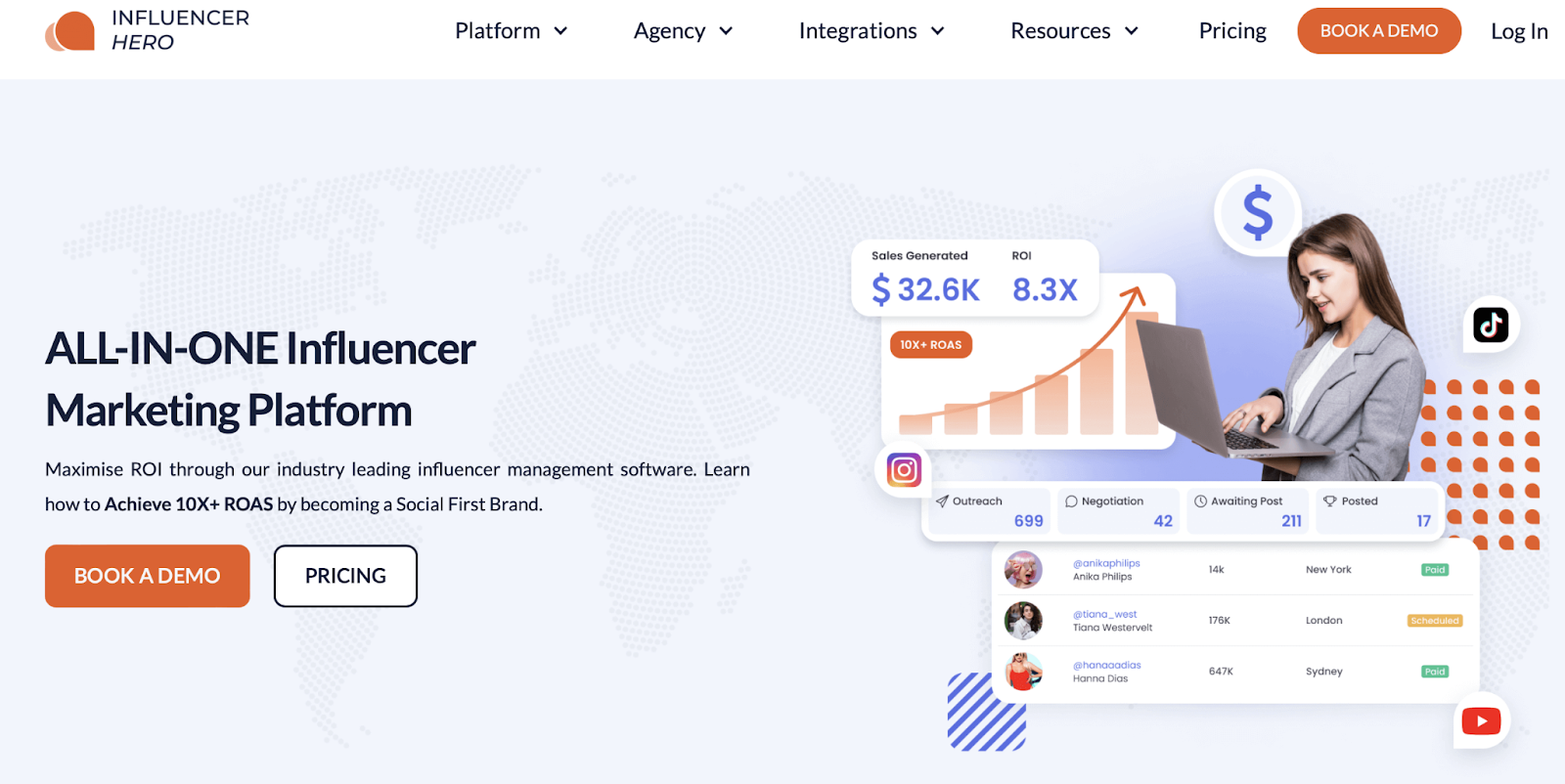
Influencer Hero is an end-to-end influencer marketing platform that automates the entire creator pipeline — from discovery and outreach to gifting, UGC, affiliates, storefronts, and ROI measurement. It is built for D2C and eCommerce brands scaling fast without needing enterprise-tier budgets.
Pricing:
- Standard — $649/month
- Pro — $1,049/month
- Business — $2,490/month
- Custom/Agency — On request
Why Influencer Hero Stands Out
- All-in-one workflow automation: Outreach, contracts, tracking, UGC, and affiliates in one place.
- AI-powered outreach personalization: Bulk sequences that still feel 1:1, improving reply rates.
- Storefronts + creator dashboards built-in: Creators track earnings transparently, boosting retention.
- Deep commerce support beyond Shopify: Supports Shopify, WooCommerce, and custom setups.
- Content & UGC management with monetization: Collect, store, and reuse UGC with creator-approved rights.
Downsides:
Advanced automation is most powerful on Pro+ plans, but still significantly more accessible than enterprise pricing. Teams may need a short onboarding session to learn workflow automation.
3. Aspire (AspireIQ)
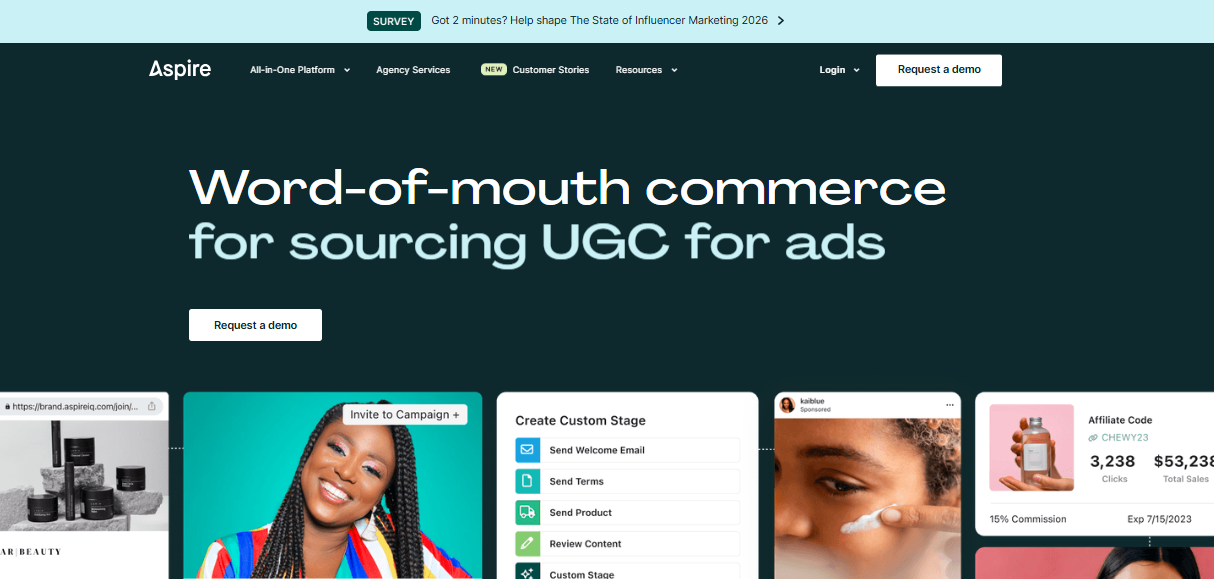
Aspire is a creator platform for DTC brands managing influencer campaigns, gifting, UGC licensing, and affiliate revenue. It enables brands to discover creators proactively or receive inbound applications at scale.
Pricing:
- Essentials — $2,299/month ($27,588/year)
- Onboarding fee — $2,000
Why Aspire Stands Out
- Marketplace + discovery in one ecosystem: Search creators or run inbound applications.
- Strong Shopify gifting automation: Fulfill products at scale with minimal manual work.
- CreatorStores for conversions: Curated storefronts that drive ongoing affiliate revenue.
- Robust UGC licensing workflows: Built-in terms to secure reuse rights.
- AI + listening discovery: Track creators already talking about your brand or identify lookalikes.
Downsides:
Pricing is high for emerging brands and requires annual commitments. Load times and lack of mobile app support can slow teams down.
4. Traackr
Traackr is an analytics-driven creator platform focused on benchmarking, spend optimization, and advanced ROI measurement. Brands use it to manage global influencer budgets with precision and performance accountability.
Pricing:
- Starts at ~$32,500/year
- Custom enterprise plans
Why Traackr Stands Out
- Brand Vitality Score visibility: Evaluates overall brand influence beyond vanity metrics.
- Precise budget optimization tools: Model creator pricing from historic performance.
- Cost-per metric reporting: CPC, CPE, CPV, and story view cost.
- Real-time campaign tracking: Identify underperformance mid-flight.
- Strong global benchmarking: Compare performance to industry averages.
Downsides:
Higher annual cost and complexity make Traackr best for established teams with an analytics mindset.
5. Modash
Modash is a discovery-first platform with one of the largest creator datasets and seamless Shopify affiliate integration. It is ideal for brands prioritizing fast creator sourcing and scalable outreach.
Pricing:
- Essentials — $199/month
- Performance — $499/month
- Enterprise — Custom
Why Modash Stands Out
- 350M+ creator profiles: Source creators by niche topics, audience traits, or keywords.
- AI + lookalike search: Find visually similar creators quickly.
- Shopify-native gifting and affiliate workflows: Codes, UTMs, and payouts built-in.
- “Find Your Fans” mode: Surfaces creators already engaging with your brand.
- Bulk outreach CRM: Contact hundreds of creators and track replies in one pipeline.
Downsides:
Only integrates with Shopify. Licensing rights must be negotiated outside the platform.
6. HypeAuditor
HypeAuditor is designed for influencer fraud detection, authenticity scoring, and audience safety validation. Brands rely on it to verify influencer quality before investing budget.
Pricing:
- Business — ~$10,000/year
- Enterprise — $60,000+/year
- Modular pricing + trial available
Why HypeAuditor Stands Out
- AQS authenticity scoring: Identifies fake engagement and inflated followers.
- AI-powered discovery filtering: Goes beyond keywords using content analysis.
- Competitor + brand listening: Track creators already discussing you.
- Lookalike recommendations: Scale creator personas after finding a winner.
- Shareable campaign reports: Visual dashboards for stakeholders.
Downsides:
More analytical than workflow-automation focused—often paired with a CRM/management tool.
7. Meltwater (Formerly Klear)
Klear is a high-level influencer platform with deep analytics, PR tools, listening, and reporting. It suits brands wanting performance visibility across both creator and media ecosystems.
Pricing:
- 3 users/300 creators — ~$50,000/year
- 5 users/1000 creators — ~$73,000/year
- Enterprise options available
Why Meltwater Stands Out
- 30M+ global creator network: Strong niche and multi-region sourcing.
- True Reach model: Predicts exposure beyond follower count.
- End-to-end workflow + payments: Run campaigns and pay in one dashboard.
- Visual discovery: Search by imagery and tone.
- Reporting templates: Branded PDFs and quick stakeholder reporting.
Downsides:
Premium pricing makes it primarily an enterprise tool.
8. Captiv8
Captiv8 is a multicultural intelligence platform built for brands running global campaigns requiring sentiment analysis and predictive data. It excels in psychographic creator matching.
Pricing:
- Platform — $25,000/year
- Onboarding — $3,000
- Storefront + affiliate service — $20,000–$30,000/month
Why Captiv8 Stands Out
- Psychographic + sentiment analysis: Evaluates tone, values, and brand safety alignment.
- Competitive monitoring: Identify creators already mentioning you.
- Campaign forecasting: Predict performance using past behavior and benchmarks.
- 15M+ international creators: Strong multicultural targeting.
- Enterprise roles + approvals: Built for complex, global teams.
Downsides:
Very costly with service add-ons—best for enterprises with large budgets.
9. GRIN
GRIN is an eCommerce-native influencer CRM used for ongoing UGC programs and affiliate management. It integrates deeply with Shopify, WooCommerce, and Magento for sales visibility.
Pricing:
- ~$2,085/month (~$25K/year)
- 12-month contract required
Why GRIN Stands Out
- Commerce + inventory workflow: Connects gifting, fulfillment, and attribution.
- Built-in CRM: Multi-campaign relationship tracking.
- UGC + affiliate model: Content and commissions together.
- Fit for high-volume DTC: Built for brands scaling aggressively.
- Content library: Repurpose UGC into ads and email assets.
Downsides:
Expensive for early-stage brands and requires yearly commitment.
10. Impact.com
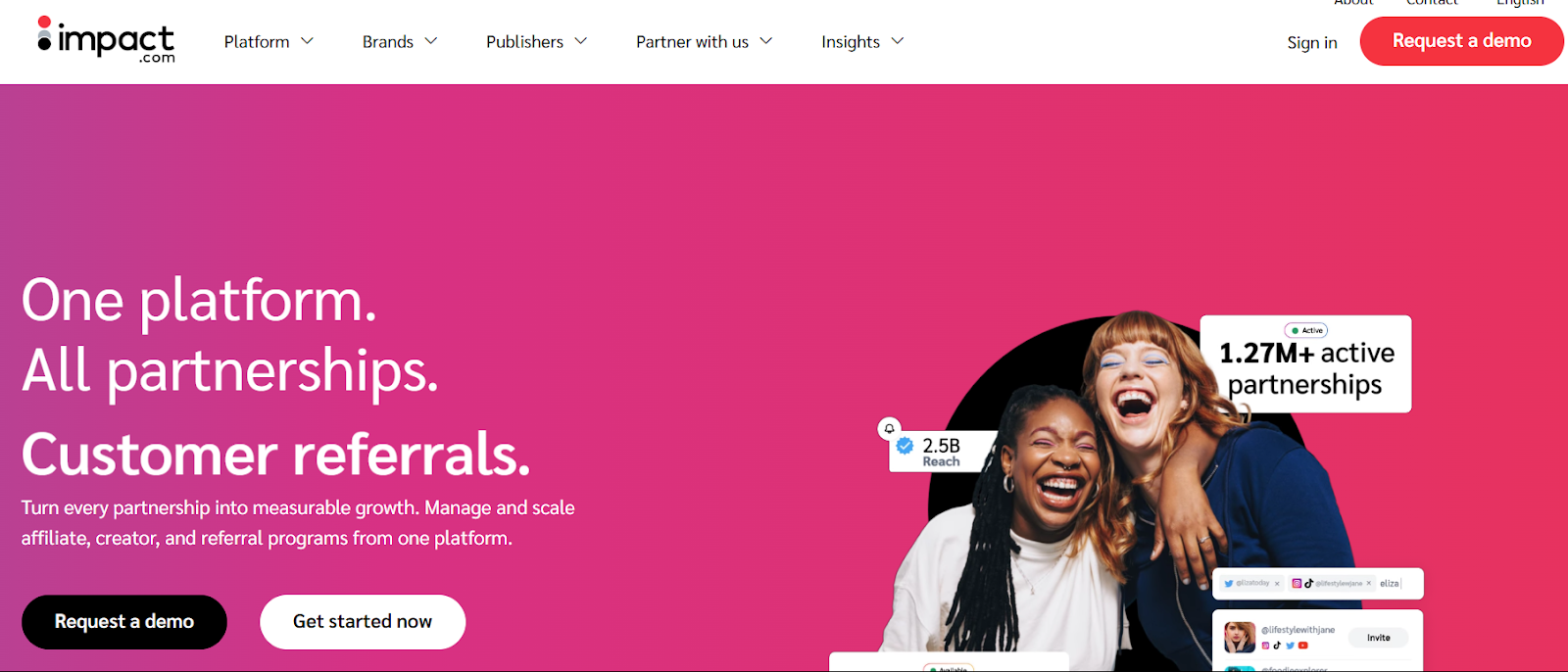
Impact.com is a partnership automation platform built for revenue-based influencer programs and affiliate performance. It’s designed for brands that want measurable sales attribution at scale rather than pure creator awareness.
Pricing:
- Starter — ~$500–$800/month
- Professional — ~$1,500–$2,500/month
- Enterprise — $20K–$60K+/year
- Transaction-based usage fees may apply
Why Impact.com Stands Out
- Affiliate & performance partnerships: Track creator posts like revenue channels.
- Whitelisting + boosting: Run creator content as paid ads under influencer handles.
- Automated payouts: Global compliance and scalable finance ops.
- Contracting workflows: Agreements and tax forms managed internally.
- Fit for performance teams: Scale budgets on ROAS, not engagement alone.
Downsides:
More affiliate-centric than creator-CRM centric, requiring a learning ramp for influencer managers. Pricing scales with transaction volume, which can climb quickly as campaigns grow.
The Tools Fueling Scalable Creator Growth in 2026
Creator-led marketing isn’t just a campaign tactic anymore — it’s a long-term growth engine. And as brands scale, the tools they choose become the difference between running scattered influencer spreadsheets and operating like a revenue-focused machine. Whether you're building high-volume gifting pipelines, activating UGC at scale, managing affiliates, or tracking revenue to the dollar, the right platform helps you move faster, reduce manual work, and collaborate with creators more effectively.
From enterprise analytics powerhouses like CreatorIQ and Traackr to more flexible performance platforms like Impact.com — and especially all-in-one automation systems like Influencer Hero — the brands winning in 2026 are those that invest in systems built for scale. Choose a tool based on your current needs, your internal workflow, and how far you plan to grow — because the creator economy is accelerating, and the brands who build infrastructure today will own the momentum tomorrow.
Ready to scale creator campaigns smarter, not harder? Your next step is choosing the platform that grows with you — and then watching what happens when creators become one of your strongest revenue channels.
FAQs
1. What are creator campaign tools and why do brands need
them?
Creator campaign tools help brands manage the full influencer
workflow — from finding creators to tracking content, managing
product gifting, running affiliate programs, and measuring
ROI. They reduce manual work and make scaling partnerships
easier and more cost-efficient.
2. Which platform is best for managing large influencer
programs?
Enterprise brands typically choose CreatorIQ, Traackr, or
Captiv8 for large-scale, multi-region campaign operations with
advanced reporting. Mid-size D2C brands looking for power
without enterprise pricing often prefer Influencer Hero.
3. How do I choose the right creator platform for my
brand?
Consider your goals: discovery at scale, reporting depth, UGC
management, affiliate tracking, or automation. Smaller brands
need usability and cost-efficiency, while enterprise teams
require data depth and multi-market support.
4. Are these tools only for influencers, or also for UGC
creators and affiliates?
Most platforms support influencers and UGC creators, while
Impact.com, Influencer Hero, and Modash excel at
affiliate-based performance tracking. If you want both UGC +
revenue attribution, choose a system built for full-funnel
workflows.
5. Can these platforms help track ROI and sales from
creator content?
Yes — most modern tools offer affiliate links, discount codes,
and conversion tracking to measure revenue impact. Platforms
like Influencer Hero, Impact.com, Modash, and GRIN are
especially strong for sales attribution and performance
reporting.